


Pruning Trees + Shrubs Series: Trimming Topiaries
The #1 question we’re asked about topiaries is, “Are they hard to maintain?” The answer is not at all—as long as you don’t let them get too overgrown before giving them a trim!
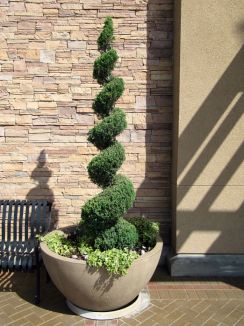
Junipers are commonly trained into spirals, pom-poms, poodles, patio trees, and other topiary forms. Their dense growth and naturally structured appearance make them great candidates for shaped plants.
How often your topiary needs trimming will depend on the variety, growing conditions, and how precise you want the shape to remain. Rather than following a strict schedule, trim when new growth begins extending noticeably beyond the desired outline.
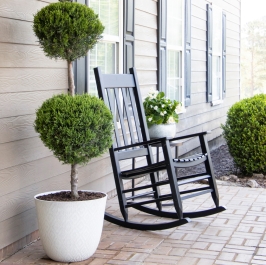
Examine Your Topiary
Before making the first cut, step back and look at the original shape of your topiary. Decide how much of the new growth needs to be removed and where the basic outline should be.
If you want to maintain its current size, trim the new growth back toward the established shape. If you’d like the topiary to gradually become larger, remove less of the new growth while still following the original pattern.
Take your time and look at the plant from several angles as you work. It’s much easier to make another small cut than to put a branch back after you’ve removed too much!
Get to Trimming
Start near the top and gradually work your way down. If you’re new to trimming topiaries, begin with a light trim in a small section until you’re comfortable following the shape.
“More is not better” when you’re learning to trim. Remove a little at a time, step back frequently, and compare the different sides of the plant before continuing.
When trimming Junipers, be especially careful not to cut deeply into old, bare wood. Junipers generally do not reliably produce new growth from leafless old wood, so keep your cuts within areas that still have healthy green foliage whenever possible.
If you make a small mistake, don’t panic. Minor uneven areas can become less noticeable as surrounding green growth develops, but a severe cut into bare wood may not completely fill back in. That’s another good reason to trim gradually!
What Should You Trim With?
Sharp bypass hand pruners or handheld pruning shears are great for making controlled cuts and working around detailed topiary shapes.
Larger hedge shears may be useful for some broad, simple shapes, but smaller tools give you much more control around spirals, pom-poms, and other detailed designs.
Whatever tool you choose, make sure the blades are clean and sharp before you begin.
What About Other Topiary Plants?
The same basic approach can be used for many other plants trained as topiaries, including Boxwood, Ligustrum, Holly, Rosemary, and some vines. However, different plant species respond differently to pruning, so always consider the needs and growth habits of the particular plant you’re trimming.
Pines and certain other conifers require different pruning techniques and shouldn’t automatically be trimmed the same way as a Juniper or Boxwood topiary.
Follow the Shape & Take Your Time!
Keeping a topiary looking beautiful doesn’t have to be intimidating. Keep your tools sharp, follow the existing outline, remove small amounts at a time, and step back frequently to check your work.
Regular light maintenance is much easier than trying to restore the shape after a topiary has become severely overgrown!