


How to Find and Treat Spider Mites
Sometimes big problems come in teeny-tiny sizes.
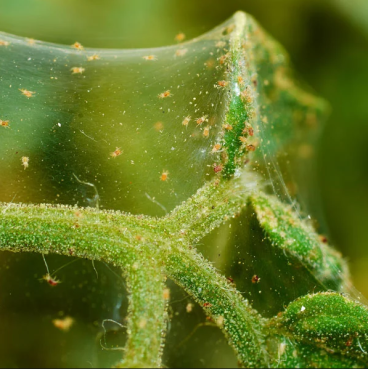
Spider mites are extremely small pests that feed by piercing plant cells and sucking out their contents, most often on the undersides of leaves. They’re difficult to see with the naked eye, but despite their tiny size, spider mites can cause a surprising amount of damage.
Leaves may develop tiny pale or yellow speckles, eventually becoming yellow, bronze, or dry as an infestation gets worse. Fine webbing between leaves and stems is another common sign of a heavy spider mite infestation.
How to Check for Spider Mites
Because spider mites are so small, it’s important to make sure they’re actually responsible for the damage before treating your plants.
Here’s an easy way to check:
• Hold a sheet of white paper underneath an affected branch or several leaves.
• Gently tap or shake the foliage over the paper.
• Look closely for tiny moving specks. Spider mites can vary in color and may appear reddish, yellowish, green, brown, or nearly black depending on the species and life stage.
If those tiny specks begin crawling across the paper, there’s a good chance you’ve found your culprit!
Spider Mites Love Hot, Dry Conditions
Spider mite populations can increase rapidly during hot, dry, dusty weather—conditions we know all too well during an East Texas summer.
Keeping plants properly watered and reducing dusty conditions around susceptible plants can help make the environment less favorable for spider mites. Periodically rinsing sturdy plants with a strong stream of water can also physically knock many mites and their eggs from the foliage, particularly when you spray the undersides of the leaves.
Keeping the area around your plants tidy and removing heavily infested or damaged plant material when appropriate can also help with management.
How to Treat Spider Mites
Spider mites can be tricky to control because they aren’t actually insects—they’re arachnids, relatives of spiders and ticks. That means a general-purpose insecticide isn’t automatically the best choice for controlling them.
In fact, some broad-spectrum insecticides can make spider mite problems worse by killing the beneficial insects and predatory mites that naturally help keep their populations under control.
Depending on the plant and severity of the infestation, options may include thoroughly rinsing the foliage or using insecticidal soap, horticultural oil, or a miticide specifically labeled for spider mite control on that particular plant.
Good coverage is extremely important. Spider mites frequently feed on the undersides of leaves, so treatments need to reach those areas to be effective.
More Than One Treatment May Be Necessary
Spider mites reproduce quickly, and their eggs may survive an initial treatment. For that reason, follow-up treatment may be necessary.
Rather than automatically treating on a fixed schedule or combining different pesticides, follow the directions on the product label for application rates, retreatment intervals, and the maximum number of applications.
If using a pesticide, make sure it is specifically labeled for spider mites and for the plant you intend to treat. Avoid applying horticultural oils or soaps during extreme heat or when plants are drought-stressed unless the product label indicates it is safe to do so.
Catch Them Early!
Spider mites may be tiny, but their populations can grow quickly. Check your plants regularly during hot, dry weather and pay close attention to yellow stippling, bronzed foliage, and fine webbing.
If you’re not sure what’s causing damage to your plants, bring a few clear photos to The Home & Garden Center and let us help you identify the problem and choose an appropriate treatment!