


Houseplant Care Series: Repotting
Is your houseplant drying out much faster than it used to? Are roots growing through the drainage holes, or has the plant’s growth slowed even though its other needs are being met? It may be time for a new container!
Gently remove the plant from its existing pot and take a look at the root system. A healthy root system doesn’t automatically mean a plant needs a larger pot, but several signs can indicate that it has become root-bound.

Signs Your Houseplant May Need Repotting
• Roots are densely crowded inside the container.
• Roots are circling around the inside of the pot or forming a tight mass around the root ball.
• Roots are growing heavily through the drainage holes.
• Water runs through the pot very quickly because there is very little potting mix remaining around the roots.
• The plant needs water much more frequently than it used to.
• Growth has slowed despite appropriate light, water, and growing conditions.
Choosing a New Container
When moving a root-bound houseplant into a larger container, don’t go too big too quickly. A pot that’s significantly larger than the root ball can hold excess moisture for too long and increase the risk of root problems.
For many houseplants, moving up to a container approximately 1–2 inches larger in diameter is plenty. Larger plants may be able to move up slightly more.
Most importantly, choose a container with adequate drainage and use a quality potting mix appropriate for your particular plant.

How to Repot Your Houseplant
• Gently remove the plant from its existing container. If it’s stuck, loosen the root ball from the sides of the pot rather than pulling hard on the stems.
• Examine the roots and gently loosen tightly circling roots with your fingers. You don’t need to completely remove all of the old potting mix or aggressively tear apart healthy roots.
• Add enough fresh potting mix to the bottom of the new container so the plant will sit at approximately the same soil depth it was growing at before.
• Leave a little space between the soil surface and the rim of the container to make watering easier.
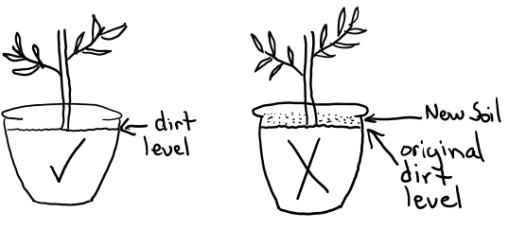
• Fill around the root ball with fresh potting mix, gently firming it into place without packing it down too tightly.
• Don’t bury the plant deeper than it was growing in its original container. Keep the base or crown of the plant at its previous soil level.
• Water thoroughly after repotting and allow excess water to drain from the bottom of the container.
Give It a Little Time to Adjust
Your houseplant may need a little time to adjust after being repotted. Keep it in appropriate light, avoid overwatering, and don’t assume a temporarily stressed plant needs fertilizer.
And remember—not every struggling houseplant needs a bigger pot! Before repotting, consider whether problems with watering, light, pests, drainage, or the potting mix could be responsible instead.